
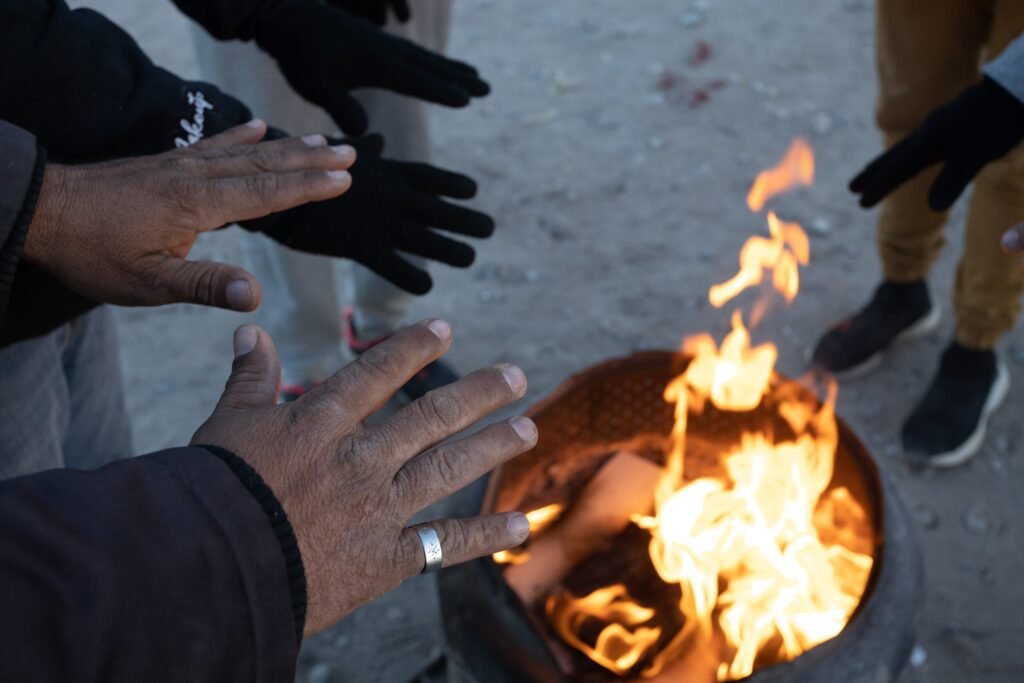
That cozy winter fire crackling in your hearth might be silently killing thousands of Americans each year, and chances are your neighbor’s smoke is worsening your family’s health even if you don’t burn wood yourself.
Story Snapshot
- Northwestern University study reveals residential wood burning accounts for 22% of wintertime fine particulate matter exposure despite only 2% of homes using it as primary heat
- Wood smoke from fireplaces, stoves, and furnaces contributes to 8,600 premature deaths annually from heart disease, lung disease, and respiratory conditions
- Suburban wood-burning emissions drift into dense urban areas, disproportionately harming vulnerable populations including people of color, children, and those with existing health conditions
- Switching to cleaner heating alternatives like gas or electric could dramatically reduce winter air pollution and save thousands of lives each year
The Hidden Culprit Behind Winter Air Quality Crisis
Northwestern University researchers published findings in Science Advances on January 23, 2026, that upend conventional thinking about residential air pollution. While regulators have focused on vehicles, power plants, agriculture, and industrial sources, home wood burning has operated under the radar. The study quantified what health experts long suspected: those romantic fires produce microscopic particulate matter that penetrates deep into lungs, causing damage far exceeding their small user base. Only 2% of U.S. households rely on wood as their main heating source, yet the practice accounts for more than one-fifth of wintertime PM2.5 exposure nationwide.
Why Your Neighbor’s Fireplace Threatens Your Health
Lead researcher Kyan Shlipak and senior author Daniel Horton discovered something unsettling: wood smoke refuses to stay put. Their modeling revealed that 70% of chimney emissions rebound into the local environment, infiltrating neighboring homes regardless of whether those residents burn wood. The EPA’s National Emissions Inventory data showed suburban wood burning creates plumes that drift toward densely populated urban centers, concentrating exposure where people already face compounded environmental burdens. Over 27 million U.S. homes have fireplaces, and many operate inefficiently compared to modern alternatives, spewing emissions that circulate through entire neighborhoods during winter heating season.
The American Lung Association has documented wood smoke’s devastating health toll for years. Fine particles trigger bronchitis, pneumonia, and asthma attacks while aggravating existing heart and lung diseases. Chronic exposure links to coughing, wheezing, heart attacks, lung cancer, and premature death.
For many people, wood fires can feel familiar or nostalgic, but wood smoke contains toxic, microscopic particles called PM2.5 that have been linked to increased risk of serious respiratory & cardiovascular health impacts. Skip the fire to help protect your community this winter! pic.twitter.com/e6Ck58KYAx
— Bay Area Air Quality (@AirDistrict) January 22, 2026
Meet My Healthy Doc – instant answers, anytime, anywhere.
The Science Behind Invisible Winter Danger
PM2.5 particles measure just 2.5 micrometers in diameter, roughly 30 times smaller than a human hair. This microscopic size allows them to bypass the body’s natural defenses, penetrating deep into lung tissue and entering the bloodstream. Winter heating creates a perfect storm: cold air traps emissions near ground level, suburban households fire up wood stoves and fireplaces for ambiance or supplemental heat, and the resulting smoke blankets neighborhoods. Northwestern’s modeling isolated wood burning’s contribution by analyzing household surveys, housing data, climate patterns, and appliance types within the EPA’s inventory framework.
The researchers contrasted residential wood burning with better-studied pollution sources. Wildfires dominate headlines and rightly concern air quality experts, but home heating operates continuously throughout winter in populated areas. Studies dating to 2014 documented ethanol fireplaces emitting dangerous chemical cocktails, yet the practice persists largely unregulated.
Solutions Backed by Hard Data
Shlipak’s conclusion carries straightforward logic: using alternative heating appliances would dramatically reduce fine particulate matter. Gas fireplaces, electric heating, and modern efficient systems produce negligible PM2.5 compared to wood combustion. The economic calculation favors switching despite upfront appliance costs, as health savings from avoided emergency room visits, hospitalizations, medications, and lost productivity dwarf installation expenses. For homeowners who cherish the fireplace aesthetic, gas units provide visual appeal without the toxic emissions. This aligns with conservative principles of personal responsibility and property rights, allowing individual choice while acknowledging real costs imposed on neighbors.
Wood burning is the most polluting way to heat your home, contributing to serious health conditions.
If you use one, Defra says:
•Burn Less often
•Burn Better – only use "Ready to Burn" certified kiln-dried logs
•Maintain your chimney – sweep it regularly #CleanAirNight pic.twitter.com/PJZxzy18EY— West Sussex County Council (@WSCCNews) January 22, 2026
Sources:
The Cozy Winter Habit Fueling Dangerous Air Pollution – SciTechDaily
Wood burning in homes drives dangerous air pollution in winter – Medical Xpress
Is Your Fireplace Making Your Family Sick – Airthings
Wood burning in homes drives dangerous air pollution in winter – ScienceDaily
Indoor Fireplace Pollution Solution – TruSens
Wood burning in homes drives dangerous air pollution in winter – Northwestern News
Smoke from Residential Wood Burning – EPA
Residential wood burning a major cause of air pollution – Observatoire Prevention