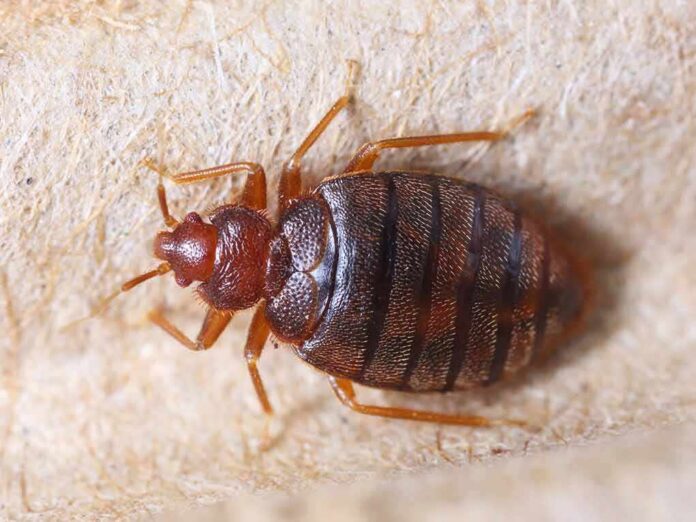
A bug the size of an apple seed can turn a good night’s sleep into a months-long home invasion, and most people miss the warning signs until the problem is already out of control.
Quick Take
- Bedbugs are confirmed by physical evidence, not by bites alone, according to health agencies.
- Signs include live bugs, shed skins, rust-colored stains, and a sweet musty smell near beds and furniture.
- Vacuuming, hot laundering, and sealing cracks are the first line of defense recommended by official sources.
- Full eradication often takes weeks or months and may require a licensed pest control professional.
How Health Agencies Say To Spot An Infestation
The Centers for Disease Control and Prevention (CDC) tells homeowners to check mattress and sheet folds for exoskeletons, live bugs, and rust-colored blood spots. A sweet, musty odor can also signal a heavy infestation. The Mayo Clinic adds dark specks, skin castings, and reddish stains as key signs to watch for near sleeping areas.
The Georgia Department of Public Health goes a step further. It states that an infestation can only be confirmed by finding live or dead bugs, cast skins, or eggs collected directly from the home. Bites on skin are not enough proof on their own, since many insect bites look alike and some people show no reaction at all.
That distinction matters. A person could have red, itchy welts from mosquitoes or fleas and wrongly assume bedbugs are to blame. Public health guidance keeps the focus on hard evidence in the home, not on symptoms alone, because misdiagnosis leads to wasted money on the wrong treatment.
Where To Look And What Counts As Proof
Inspections should focus on mattress seams, box springs, bed frames, and baseboards, according to the Environmental Protection Agency (EPA) and state health departments. Bedbugs hide in tight cracks close to where people sleep, since they feed at night and retreat during the day. Washington State Health specifically flags seams and crevices as the most common hiding spots.
Furniture near the bed, electrical outlets, and even picture frames can harbor bugs too. Consumer Reports notes bedbugs cannot live inside foam but will tuck themselves into any nearby crack, including small gaps in a bed frame. Checking these spots with a flashlight and a stiff card can reveal bugs hiding just out of sight.
What Official Guidance Recommends For Treatment
Once bedbugs are confirmed, the Mayo Clinic recommends vacuuming all crevices thoroughly and washing infested items on high heat, at least 120 degrees Fahrenheit, for 20 minutes in a dryer. South Australia Health echoes this, calling for hot washing and drying along with sealing cracks and crevices to remove hiding places.
Chemical treatment is not off-limits, but it comes with rules. The National Pesticide Information Center stresses reading and following label directions closely and confirming a product is actually labeled for bedbugs before use. Repeat applications are often necessary, since one treatment rarely kills an entire population, including eggs that hatch later.
Texas health officials go further, warning that over-the-counter foggers and sprays will not eliminate an infestation on their own. Illinois health officials note that even with a full integrated pest management plan, eradication often takes weeks or months, with follow-up inspections needed every two weeks to catch any bugs that survived the first round.
Why This Is Rarely A One-Step Fix
Massachusetts guidance describes a similar timeline. A licensed provider typically returns two weeks after the first chemical treatment to check for lingering activity, applying a second treatment if live bugs turn up. This pattern shows up across nearly every state health agency: confirm, treat, wait, recheck, and repeat until inspections come back clean.
Reducing clutter, encasing mattresses in zippered covers, and vacuuming regularly all cut down on hiding spots and make follow-up inspections easier. Bedbugs are not known to spread disease, but they cause real stress, lost sleep, and repeated cleaning costs for households that face them. Sticking to evidence-based steps, rather than guesswork, remains the fastest path back to a bug-free bedroom.
Sources:
epa.gov, dph.georgia.gov, doh.wa.gov, my.clevelandclinic.org, michigan.gov