

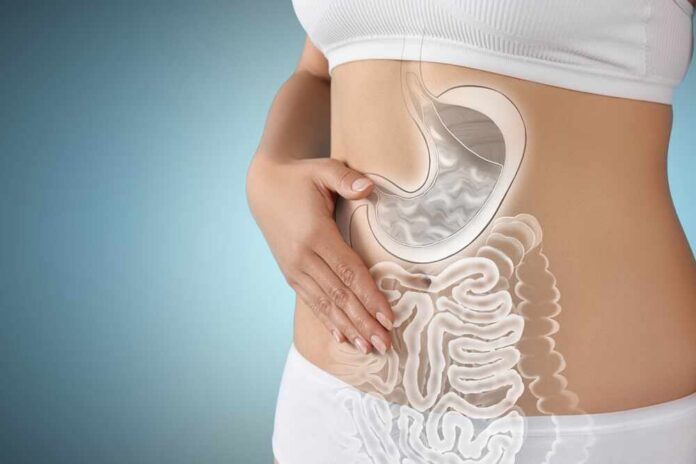
The soft ring around your waist is not just a cosmetic annoyance – for many people in midlife, it may be the earliest visible sign that their brain is quietly drifting toward dementia.
Story Snapshot
- Hidden “visceral” belly fat, not just overall weight, tracks with higher dementia risk and Alzheimer’s brain changes decades before symptoms. [1][4][7]
- A huge British cohort found a tipping point: once visceral fat passes a sex‑specific threshold, each extra notch raises dementia risk. [1][8]
- Brain scans link abdominal fat to more amyloid and tau proteins, thinner brain cortex, and worse thinking scores. [3][4][5][7]
- Researchers still describe associations, not proof of causation, but the trend lines all point in the same troubling direction. [1][4][7][8]
Why That “Hard-To-Lose” Belly Suddenly Matters For Your Brain
Doctors once obsessed over the bathroom scale; now they are staring at your belt line. Several research groups report that fat packed deep around the organs – visceral fat – behaves very differently from the softer padding under the skin. A major Neurology paper using United Kingdom Biobank data followed more than 137,000 older adults for about 14 years and found that predicted visceral fat percentage had a non-linear, U-shaped relationship with dementia risk. [1][8] Below each sex’s median, modest increases were neutral or slightly protective; above that median, risk started to climb. That pattern undercuts simplistic “all lower is better” slogans and instead paints a picture of a metabolic tipping point: once visceral fat crosses into unhealthy territory, the brain seems to notice.
Association alone does not prove that belly fat harms the brain, so researchers turned to imaging. A study highlighted by the Radiological Society of North America used brain scans in people in their 40s and 50s, decades before typical Alzheimer’s symptoms, and linked higher visceral fat to more amyloid and tau – the two hallmark proteins of Alzheimer’s disease. [4] The press materials report that visceral fat explained roughly three-quarters of the effect of higher body mass on amyloid buildup, suggesting that where fat sits on the body may matter far more than the number on the scale.
What Brain Scans Are Revealing About Metabolic Dysfunction
The National Institute on Aging spotlighted work showing that higher body mass index, abdominal obesity, and insulin resistance scores all related to thinner brain cortex, an early structural marker of neurodegeneration. In men, abdominal obesity specifically linked to higher beta-amyloid levels in the precuneus cortex, a brain region that suffers early damage in Alzheimer’s disease. [7] Harvard Health summarized similar findings: visceral fat, but not subcutaneous fat, tracked with higher amyloid and tau and with insulin resistance and lower high-density lipoprotein cholesterol, a familiar heart risk marker. [3]
Rutgers Health reported that in middle-aged adults who already carried a family history of Alzheimer’s disease, fat around the pancreas, liver, and belly showed stronger ties to brain volume and thinking performance than body mass index did. Their summary bluntly concludes that abdominal fat depots, not body mass index, looked like the real risk factor for lower cognitive functioning and higher dementia risk. [5] Monash University researchers, drawing on an older ASPREE cohort, went further: men with high belly fat faced higher dementia risk, while greater lean mass and even higher overall fat mass appeared somewhat protective when it was not concentrated at the waist. [6] Taken together, these studies suggest that a stocky farmer with muscle and evenly distributed padding is not in the same risk category as a thin-armed executive with a hard, protruding gut.
The Temptation To Shout “Belly Fat Causes Dementia” – And Why Caution Still Matters
Health headlines love a villain, and visceral fat makes a perfect one. It hides under normal clothing, it links to insulin resistance and inflammation, and now it seems to shadow Alzheimer’s markers twenty years before memory lapses. [2][4] But the strongest dementia-outcome study in this set rests on predicted visceral fat percentage rather than direct imaging; that estimation introduces uncertainty, because the algorithm might partly capture other traits bundled with central obesity, such as overall frailty or unmeasured illness. [1][8] Moreover, the Neurology authors explicitly report no significant interaction between visceral fat and genetic or lifestyle risk scores, which tempers bold claims that targeted lifestyle tweaks magically erase genetically loaded risk. [1][8]
The convergence is hard to ignore: belly-centered fat ties to worse fluid intelligence and memory tasks, higher odds of all-cause and vascular dementia, thicker clusters of amyloid and tau, and structural brain thinning across multiple cohorts. [3][4][5]
What You Can Actually Do With This Information
No study here offers a magic bullet, but they agree on a theme: metabolic health in midlife sets the table for brain health in later life. Excess visceral fat usually rides in the same car with high blood sugar, elevated blood pressure, low “good” cholesterol, and creeping insulin resistance. [3][7] Lifestyle habits that chip away at that bundle – walking daily, building muscle, favoring real food over processed sugars, managing sleep and stress – look boring compared with cutting-edge drugs, yet they are precisely the levers these cohorts highlight as realistic ways to improve metabolic profiles. While scientists hash out whether visceral fat is the best predictor, you do not need a perfect algorithm to see the practical upside of trading a tightening belt for looser jeans and a clearer mind.
Sources:
[1] Web – Association of Predicted Visceral Fat Percentage With Dementia …
[2] Web – This Type of ‘Hidden Fat’ May Be Especially Bad for the Brain
[3] Web – High levels of visceral fat may predict Alzheimer’s – Harvard Health
[4] Web – Hidden Fat Predicts Alzheimer’s 20 Years Ahead of Symptoms | RSNA
[5] Web – Abdominal Fat Can Impact Brain Health and Cognition in High …
[6] Web – Dementia protection linked to where the body lies – belly fat a risk …
[7] Web – Excess belly fat in midlife may be associated with early markers of …
[8] Web – Association of Predicted Visceral Fat Percentage With Dementia …