

Imagine never injecting insulin again, even after decades of type 1 diabetes—scientists at MUSC just unveiled a plan that could make this reality for millions.
Story Snapshot
- Leonardo Ferreira’s $1M-funded therapy pairs lab-grown beta cells with engineered Tregs to dodge immune attacks without drugs.
- Preclinical tests in humanized mice show one-month protection, targeting all T1D stages including long-term cases.
- Off-the-shelf design scales beyond donor limits, potentially curing 2M+ Americans.
- Builds on FDA-approved Lantidra but eliminates immunosuppression risks for children and adults.
Ferreira’s Two-Part Cellular Breakthrough
Leonardo Ferreira, Ph.D., at the Medical University of South Carolina leads this therapy. He engineers stem cell-derived beta cells that produce insulin. Custom regulatory T cells (Tregs), gene-edited for precision, shield these beta cells from immune destruction. Breakthrough T1D awarded $1 million on March 2, 2026, to advance preclinical work. This combination restores insulin production naturally. Patients at any T1D stage qualify, even those without remaining beta cells. Early humanized mouse tests confirm one-month protection.
Type 1 Diabetes: The Autoimmune Enemy
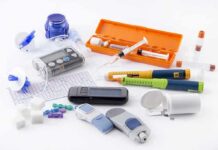
The immune system destroys pancreatic beta cells in T1D, forcing lifelong insulin dependence. Insulin therapy risks deadly hypo- and hyperglycemia. Over 2 million Americans suffer, including children facing ketoacidosis threats. Insulin pumps manage symptoms but never cure. Islet transplants since the 1980s fail due to donor shortages and required immunosuppression. Ferreira’s approach uses scalable lab-grown cells. Gene-edited Tregs induce tolerance specifically.
Precedents Paving the Path Forward
FDA approved Lantidra in June 2023, the first cellular T1D therapy. It achieves insulin independence in 70% of patients at one year, 34% at five years. University Hospitals began administering it in November 2025 under Betul Hatipoglu, MD. Stanford’s Seung K. Kim, MD, PhD, refined mouse cures in 2025 using clinical-grade immune resets. Encellin reported positive Phase 1 interim results January 6, 2026, for encapsulated islets in Canada. These validate cell replacement but highlight Ferreira’s edge: no immunosuppression.
Ferreira started with a 2021 SCTR pilot grant, partnering with Russ. Funding now tests Treg durability, delivery, and dosing. Ferreira states this therapy suits all stages and redefines medicine. Preclinical success foreshadows human trials soon.
A bold new plan could finally cure type 1 diabetes – ScienceDaily – https://t.co/StMQGLYdn2 #GoogleAlerts
— James Myers (@JamesMy56782210) March 4, 2026
Impacts Reshaping Lives and Medicine
Short-term, expanded preclinical data speeds trials; Lantidra aids select patients now. Long-term, success means one-time transplants curing T1D, freeing children from drugs and families from daily burdens. Economic gains cut donor reliance and transplant costs through scalable production. Socially, quality of life soars without management hassles. Politically, it boosts NIH and Breakthrough T1D funding for regenerative medicine.
Uncertainties remain: Treg protection lasts one month in tests, needing extension. Human trials take years. Yet consensus among experts like Kim deems immune resets transformative. Facts support optimism without overpromising.
Sources:
A bold new plan could finally cure type 1 diabetes
UH Approved as a U.S. Site to Administer Breakthrough Treatment Lantidra for Type 1 Diabetes
Stanford mouse study on type 1 diabetes cure
Encellin Phase 1 interim results
diaTribe on cell therapy breakthroughs