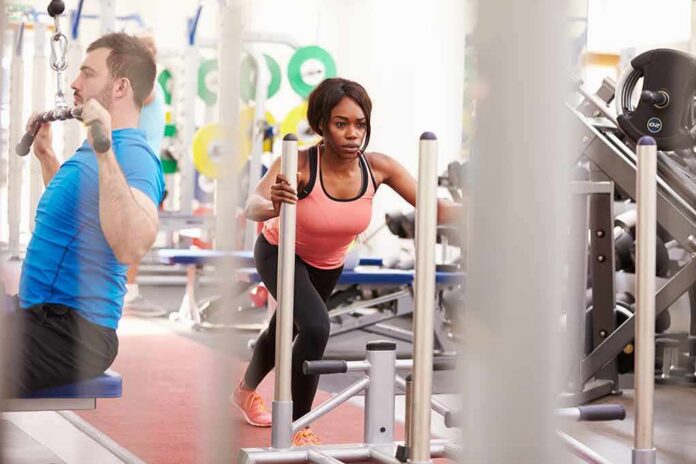
Women who start strength training during perimenopause often describe the same thing: their mood steadies, their focus sharpens, and they feel in control of their bodies again.
Quick Take
- A 2023 study of women in perimenopause found many reported better mood, focus, and emotional control after strength training
- Separate research reviews link resistance exercise to improved negative mood and quality of life during the menopause transition
- Scientists say the strongest evidence still points to exercise overall, not resistance training alone, as the clear mood booster
- Doctors stress strength training should support mental health care, not replace treatment for diagnosed depression or anxiety
What Women Are Reporting About Lifting and Mood
Researchers at Leeds Beckett University asked perimenopausal women about their experience with strength training. The women described it as a mental health game-changer. Many said lifting weights helped them feel more focused, more in control, and more emotionally steady during a time known for mood swings and anxiety.
The study used an online survey, not a lab experiment. That means researchers captured real feelings and experiences, but they could not prove strength training alone caused the mood shift. Women who choose to start lifting weights may already be more motivated or health focused than average, which could shape their results.
Where the Science Gets More Solid
A systematic review published in 2023 looked at exercise studies involving women going through perimenopause and menopause. One trial it cited found that women doing total-body resistance training showed bigger improvements in negative mood than women who did not train. The difference showed up in both the training and control groups’ before-and-after scores.
A broader health review backs this up on a wider scale. It found that both aerobic exercise and resistance training have been linked to better mood in older adults. The same review found a steady, dependable connection between physical activity and improved psychological symptoms, sleep, and mood in midlife women generally.
Why Doctors Urge Caution Before Calling It a Cure
Not every study agrees on how strong the resistance-training effect really is. A 2020 systematic review found that resistance training did not consistently improve quality of life tied to menopause symptoms. It found limited proof that resistance training alone helps with depression or anxiety, separate from combined programs.
Most research also mixes resistance training with aerobic exercise or studies women across different stages, from perimenopause through postmenopause. That makes it hard for scientists to say strength training by itself, rather than exercise in general, is responsible for mood improvements.
This pattern shows up across the broader research landscape too. Reviews often lump walking, yoga, pilates, and strength work together under one umbrella, then report that “exercise helps mood” during menopause. That is true, but it is a different and weaker claim than saying strength training specifically treats perimenopausal mental health symptoms.
What This Means for Women Right Now
None of this means women should ignore what they feel in the weight room. Reported benefits, including better focus, steadier mood, and a sense of empowerment, line up with a reasonable explanation. Strength training can improve sleep, reduce stress, and build physical confidence, all of which support emotional wellbeing during a hormonally rocky stretch of life.
The responsible takeaway is straightforward. Strength training looks like a genuinely helpful tool for mood and confidence during perimenopause, backed by both personal testimony and emerging science. It should not replace treatment for clinical depression or anxiety, and women experiencing serious symptoms should still talk to a doctor rather than relying on the gym alone.
Sources:
youtube.com, eprints.leedsbeckett.ac.uk, bmcwomenshealth.biomedcentral.com, frontiersin.org, pmc.ncbi.nlm.nih.gov