
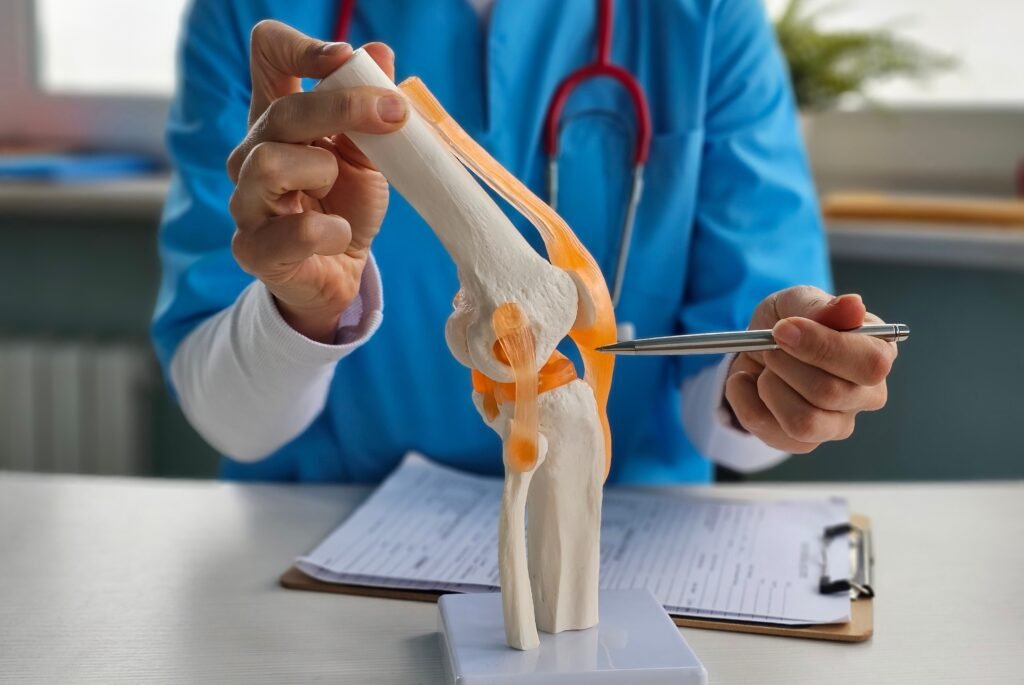
Stanford scientists discovered they can regrow cartilage in aging joints without stem cells by blocking a single protein, potentially eliminating the need for millions of joint replacement surgeries.
Story Snapshot
- Researchers at Stanford Medicine reversed cartilage loss by inhibiting 15-PGDH, a protein linked to aging, reprogramming existing cells into a more youthful state
- The treatment worked on both age-related degeneration and post-injury osteoarthritis in mice and human tissue samples from knee replacement patients
- Phase 1 clinical trials of the oral inhibitor for muscle weakness already demonstrated safety in healthy volunteers, with cartilage regeneration trials anticipated soon
- The breakthrough represents a paradigm shift away from stem cell therapies that proved difficult to implement in cartilage tissue
The Protein That Steals Your Mobility
Millions of Americans wake up each morning to stiff, aching knees that make climbing stairs feel like scaling mountains. The culprit is 15-PGDH, an enzyme that increases with age and systematically shuts down your body’s cartilage repair program. Stanford researchers Helen Blau and Nidhi Bhutani identified this protein as the master switch controlling whether your joints regenerate or deteriorate. Their discovery challenges decades of failed attempts to restore cartilage through stem cell transplantation, which never gained traction because stem cells struggle to survive in cartilage tissue.
The research team tested their theory by blocking 15-PGDH in mice with cartilage damage. The results startled even the scientists themselves. Cartilage regrew dramatically, surpassing regeneration levels achieved by any previous drug or intervention. The mechanism works by preventing 15-PGDH from degrading prostaglandin E2, a molecule essential for tissue repair. When prostaglandin E2 levels rise, existing cartilage cells receive biochemical signals that essentially reverse their aging, activating dormant regenerative programs without introducing any external cells.
Stanford scientists found a way to regrow cartilage and stop arthritis https://t.co/PEzfU5vCar
— Zicutake USA Comment (@Zicutake) January 21, 2026
From Lab Bench to Operating Room
The Stanford team validated their findings using tissue samples from patients undergoing knee replacement surgery. These human cartilage specimens, already damaged by years of wear and arthritis, responded to 15-PGDH inhibition in laboratory conditions. Bhutani emphasized the clinical significance, stating the inhibitor causes regeneration beyond anything previously reported. The discovery addresses an enormous unmet medical need because current treatment options for cartilage loss remain limited to pain management, physical therapy, and ultimately joint replacement surgery when deterioration becomes severe.
Watch:
The path to clinical availability accelerates because researchers already completed Phase 1 safety trials of an oral 15-PGDH inhibitor for age-related muscle weakness. Those trials demonstrated the drug is safe and active in healthy volunteers. Blau expressed hope that similar trials for cartilage regeneration will launch soon. An injectable formulation is also under development, potentially offering orthopedic surgeons direct delivery options for treating specific joints. The dual approach provides flexibility for treating both systemic age-related cartilage loss and localized damage from injuries.
The ACL Injury That Never Heals
Athletes and active adults face a grim statistic: half of all people who tear their anterior cruciate ligament develop osteoarthritis within fifteen years, even after surgical repair. The initial injury triggers a cascade of inflammatory responses and cellular changes that conventional surgery cannot reverse. The Stanford discovery offers potential intervention immediately after injury, possibly preventing the long-term degeneration that currently seems inevitable.
The research builds on previous work from Blau’s laboratory demonstrating that prostaglandin E2 plays essential roles in muscle stem cell function. Earlier studies showed that inhibiting 15-PGDH supports regeneration in muscle, nerve, bone, colon, liver, and blood cells in young mice. The current cartilage breakthrough extends this gerozyme inhibition approach to one of the body’s most regeneration-resistant tissues. Blau noted the team was initially searching for stem cells but discovered they are clearly not involved, calling the finding very exciting.
The Reality Check Nobody Wants
Before anyone cancels their scheduled knee replacement, the sobering truth remains that human efficacy trials have not yet begun for cartilage regeneration. Translation from mouse models to FDA-approved treatments typically requires five to ten years of clinical trials across three phases, testing safety, efficacy, and optimal dosing in progressively larger patient populations.
The economic implications are staggering. Joint replacement surgery represents a multi-billion-dollar industry, and successful cartilage regeneration therapy would fundamentally disrupt this market while creating new pharmaceutical revenue streams. Healthcare systems could realize substantial cost savings if the treatment proves effective and affordable compared to surgical intervention.
Meet My Healthy Doc – instant answers, anytime, anywhere.
Sources:
Stanford Medicine – “Stanford scientists found a way to regrow cartilage and stop arthritis” – ScienceDaily, January 20, 2026
Stanford Medicine – “Inhibiting a master regulator of aging regenerates joint cartilage” – Stanford Medicine News, November 27, 2025
New Regeneration Orthopedics – Clinical perspective on cartilage repair breakthrough and existing treatment options