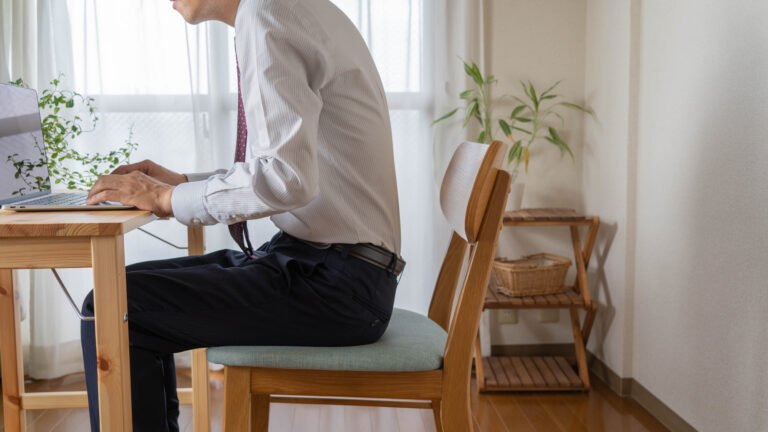
Sitting all day silently sabotages your spine and hips, but physical therapists reveal simple stretches that reverse the damage in minutes.
Story Snapshot
- Prolonged sitting tightens hip flexors by 10% and slashes chest mobility by 15%, sparking pain in office workers.
- Therapists like Diane Carroll prescribe targeted stretches to restore lumbar motion lost after just two hours.
- Studies on 1,500 desk workers prove active breaks cut neck pain from 44% to 17% and back pain from 33% to under 10%.
- Daily 10-minute routines yield 15-20% mobility gains, preventing chronic issues aligned with common-sense self-care.
- Experts debunk posture myths, prioritizing pain-free movement over rigid rules for real-world results.
Prolonged Sitting Triggers Specific Physical Harm
Office workers endure 8-10 hours seated daily, flexing hips forward and rounding shoulders. This lost lumbar lordosis and forward head posture flatten the spine’s natural curve after 30 minutes. Early 2000s research links two-hour sessions to lumbar range of motion impairment. Hip flexors shorten up to 10% after six hours, while chest mobility drops 15% and fatigue climbs 18%. Remote work post-2020 worsened these trends globally.
Physical Therapists Target Key Tight Spots
Diane Carroll, orthopedic therapist at Hospital for Special Surgery, identifies hip flexors and hamstrings as prime victims. Excessive sitting hinders the upright stance by pulling the pelvis forward. Her Modified Thomas stretch loosens hip flexors from a seated position. Seated Hamstring stretch counters posterior chain tightness. Mark Gugliotti, D.P.T. at New York Tech, adds neck and back moves for posture. These address rounded shoulders and reduced mobility directly.
Evidence-Backed Stretches Combat Desk Damage
Mindbodygreen details eight seated stretches like Scapular Retraction and Cervical Rotation. Perform 1-2 minutes each daily. A study of 1,500 office workers shows active breaks slash neck pain onset to 17% versus 44% in controls, and low back pain to 7-9% from 33%. Dr. Lisa Giannone recommends 10-minute sessions to reset the body. Dr. Stuart McGill advocates weekly 25-minute deep holds for spine tissues. Consistency trumps intensity.
Watch:
https://www.youtube.com/watch?v=oBlpW40mvGA
Short-Term Relief Meets Long-Term Prevention
Ten to 30-minute sessions boost flexibility 15-20%, ease pain by 20%, and improve posture immediately. Long-term, they cut chronic low back pain risk by 25% and reverse sedentary fatigue spikes. Desk workers and older adults benefit most, gaining mental clarity too. Employers adopting standing desks or breaks reduce stiffness 20%. Economic wins include lower healthcare costs and higher productivity from energized teams.
Expert Consensus Challenges Old Myths
Gugliotti stresses daily mobility for hips, neck, and back. Studies confirm dynamic exercises preserve lumbar motion unlike static sitting. Recent views prioritize pain-free movement over perfect posture. Cross-legged sitting proves neutral, not harmful. Peer-reviewed data on active interventions outperforms controls reliably. These therapist protocols, grounded in biomechanics, align with conservative values of personal responsibility and practical health fixes.
Sources:
A physical therapist says these are the two simple stretches people who spend too much time sitting should do
PMC article on sitting effects
How often should you stretch if you sit all day
Combat Sitting All Day: 8 Stretches A Physical Therapist Does
Physical Therapist Shares Benefits of Daily Stretching
Sitting Cross-Legged
14 Stretches to Counteract the Effects of Sitting, From a Physical Therapist
Debunking the Posture Myth: Why Pain-Free Movement Matters More Than Sitting Straight