
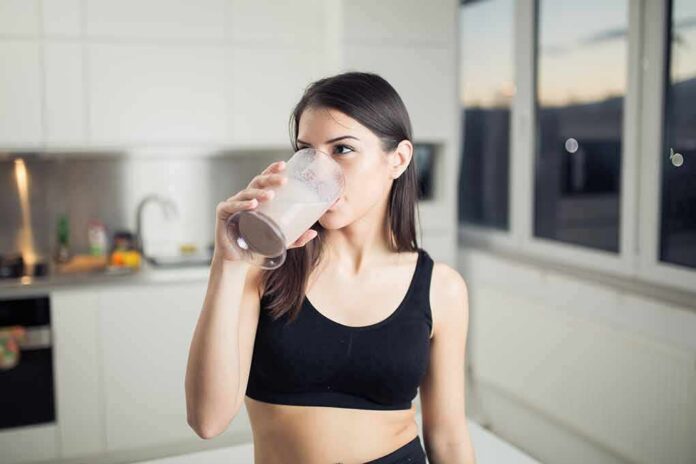
Your protein shake does not go straight to muscle—your gut and liver call first dibs.
Story Snapshot
- Protein is digested into amino acids and tiny peptides before absorption.
- The small intestine absorbs these, then sends them to the liver first.
- The liver and gut use a big share; the rest goes to muscles and other tissues.
- Meal size, protein type, and energy balance shape how much reaches muscle.
Protein does not absorb as protein, and that matters
The gut cannot absorb whole proteins. Stomach acid and gastric pepsin start the job, chopping long chains into smaller pieces. The pancreas sends in trypsin and other enzymes to cut them further. Brush-border enzymes on the small intestine finish the job. What the body pulls in are amino acids and short di- and tri-peptides, not intact steak or whey molecules. Standard nutrition texts teach this basic path clearly and consistently.
The small intestine moves these amino acids into the blood that drains to the liver. That route is called the portal pathway. It puts the liver in charge of first-pass handling. Educational sources describe this as the checkpoint that sets how much of each amino acid reaches the rest of the body. That first stop is not a detour; it is design. The gut uses amino acids for its own repair, and the liver manages fuel, detox, and vital proteins like albumin and clotting factors.
The splanchnic “toll booth”: what gets kept, what moves on
Researchers call the gut and liver together the splanchnic bed. Stable isotope studies show this bed keeps a large share of non-essential, glucogenic amino acids for its own use. A review reports that about three quarters of branched-chain amino acids, which muscles favor, often pass through to the wider circulation. The split depends on meal size, protein source, and total energy intake. This is not waste. It is triage that keeps your core systems running.
Older human data show how strong that first pass can be after big meat meals. One report found the liver converted more than half of incoming amino nitrogen to urea during first pass, while only about a quarter entered circulation as free amino acids. That study had limits, but it illustrates the point: big boluses mean bigger splanchnic claims. Smaller, spaced doses can change the split and may favor muscle synthesis windows.
From bloodstream to biceps: timing, type, and total intake
Once amino acids clear the liver, muscles compete with every other tissue. Muscle protein synthesis rises when amino acid levels rise, especially with exercise. Fast-digesting proteins can raise levels quickly; slower ones provide a longer trickle. Leucine acts like a key that turns on muscle building, but it still needs enough total amino acids behind it. Training sets the stage; the right dose and timing cue the orchestra. Overeating protein without need invites more oxidation, not endless muscle.
Viewers heard this message in the Institute of Human Anatomy’s protein absorption explainer: digestion creates absorbable parts, the intestine absorbs them, and the liver sees them first before muscles get their share. The channel later stressed that a shake often “feeds your liver” before your muscles. That phrasing is blunt, but it lines up with textbook flow and modern tracer work. The liver is the gatekeeper, not the villain; muscles still benefit when the plan fits the goal.
Practical playbook: eat smart for muscle and health
Lift weights to give muscles a reason to use amino acids. Spread protein across meals to avoid overloading first-pass pathways at one sitting. Include leucine-rich sources—dairy, eggs, meat, soy—so each meal crosses the “on” threshold for muscle building. Match protein to your true needs and your energy balance. When calories are tight, protein helps protect muscle. When calories are high, extra protein gets burned or turned to urea more than into new muscle. That is common sense, backed by physiology.
Sources:
youtube.com, scribd.com, cambridge.org, med.libretexts.org, aiimsrishikesh.edu.in