

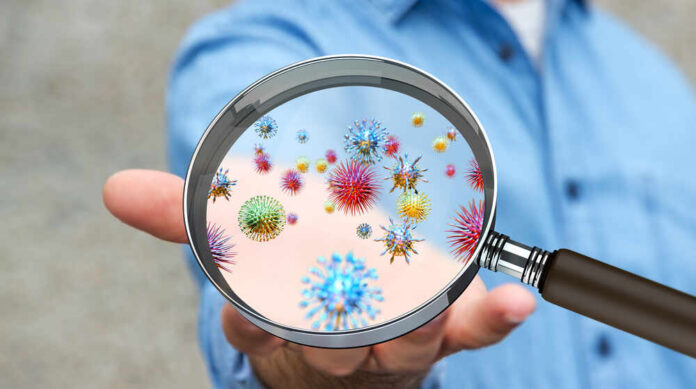
A hidden virus lurking inside common gut bacteria doubles the odds of colorectal cancer, turning a harmless microbe into a potential killer.
Story Snapshot
- Novel bacteriophage in Bacteroides fragilis appears twice as often in colorectal cancer patients across global cohorts.
- Resolves paradox of ubiquitous gut bacterium linked to cancer only in some people.
- Published February 7, 2026, in Communications Medicine, verified in 877 stool samples from Europe, US, Asia.
- Potential for stool-based screening detecting 40% of cases, enhancing non-invasive diagnostics.
- Causality unproven; virus may alter bacteria or mark cancer-prone guts.
Discovery of the Viral Hitchhiker
Flemming Damgaard’s team at Odense University Hospital and University of Southern Denmark sequenced gut bacteria from Danish colorectal cancer patients and healthy controls. They identified a previously undescribed bacteriophage embedded in Bacteroides fragilis. This prophage infects bacteria, hijacking their machinery. Cancer patients showed traces twice as often. The finding surprised researchers, who expected bacterial differences alone
Verification expanded to 877 stool samples across Europe, the US, and Asia. The association held firm, with cancer patients roughly twice as likely to carry the virus. B. fragilis exists in most healthy guts, but this viral passenger distinguishes harmful strains. Prophages alter bacterial behavior in other diseases, hinting at similar mechanisms here.
Unraveling the Gut Cancer Paradox
Bacteroides fragilis links to colorectal cancer surfaced years ago through repeated detections in tumors. Healthy people carry it without issue, creating confusion. Genetic analysis revealed the prophage in cancer-associated strains. This virus may equip bacteria with cancer-promoting tools like inflammation triggers, echoing precedents with Fusobacterium nucleatum and toxin-producing E. coli.
Damgaard noted the virus reproduces in independent datasets but stressed no causality proof. The gut microbiome influences cancer via diet, lifestyle, and microbial shifts. Colorectal cancer ranks high in developed nations; current tools like colonoscopies miss early signs. This discovery spotlights intra-bacterial viruses over bacteria alone
Expert Insights and Cautions
Michael Chuong, radiation oncologist at Miami Cancer Institute, views the viruses as potential risk markers. They change bacterial behavior without proving direct causation. People with the infected bacteria face higher odds, but the gut environment might favor both virus and cancer. Consensus demands mechanistic studies before clinical use.
A preliminary panel of prophage fragments detected about 40% of cases. Gavi.org calls this promising yet early; ecancer highlights higher frequency in pre-cancer patients. Facts align strongly on prevalence, with Communications Medicine as the gold standard source.
George McInerney finds this interesting 👍 Hidden virus in your gut may be linked to colon cancer https://t.co/lTkTQUAR66
— George McInerney (@gmcinerney) April 22, 2026
Short-term, virome research accelerates; stool tests could supplement fecal blood checks, cutting colonoscopy burdens. Long-term, causal links might yield probiotics or antivirals targeting the virus-bacteria duo. Patients gain risk insights; carriers face screening anxiety. Economic wins include cheaper detection; socially, it boosts microbiome awareness.
Sources:
Hidden Virus Found in Gut Bacteria Is Linked to Colorectal Cancer
Scientists Find Hidden Gut Virus That Raises Colon Cancer Risk
Virus in gut bacteria may be linked to colorectal cancer risk, study finds
A virus hiding inside bacteria may help explain colorectal cancer
Newly discovered virus linked to colorectal cancer – ecancer
Unmasking the microbiome: the hidden role of gut bacteria in … – PMC