
You can’t “cancel” cholesterol without canceling the biology that keeps you alive—and that’s the trap hidden inside the seductive idea of stopping production entirely.
Quick Take
- Your liver already makes the cholesterol your body needs for hormones, vitamin D, and cell membranes.
- The real problem isn’t cholesterol’s existence; it’s chronically elevated levels that raise cardiovascular risk.
- Saturated fat and added sugar can push your body to manufacture more cholesterol than you need.
- Soluble fiber pulls double duty: it helps lower cholesterol and blunts blood-sugar spikes that can drive production.
“Stop making it” sounds clean—until you remember what cholesterol does
The premise feels like a silver bullet: if cholesterol can clog arteries, why not shut the factory down? Because cholesterol isn’t a toxin; it’s a building material. Your cells use it to maintain sturdy membranes, and your body relies on it to make key hormones and vitamin D. The smarter goal is control, not elimination—keeping levels in a healthy range without breaking systems that depend on it.
That distinction matters because it reframes the whole debate. The question isn’t whether cholesterol is “good” or “bad.” The question is why modern life nudges many people into overproduction and poor balance—then sells them either shame (diet harder) or shortcuts (magic fixes). Adults over 40 don’t need another lecture; they need the underlying levers explained plainly, so everyday choices feel practical instead of punitive.
The body’s “cholesterol thermostat” responds to what you eat, not just what you measure
Most people still picture cholesterol as something you simply “consume,” like salt or calories. The more important reality: the body manufactures what it needs, then adjusts output based on signals. Dietary saturated fat stands out as a major driver because the body converts it efficiently into cholesterol. Added sugar matters too, because insulin signaling can push the body toward making more. The lab number is the smoke; food patterns often light the fire.
If a person swaps a sugary breakfast and a pastry “coffee snack” for eggs with vegetables or plain yogurt with nuts, they didn’t just cut calories. They changed the hormonal message that tells the liver whether to ramp production up or down. The same logic applies to dinner: trading heavily processed, high-saturated-fat meals for simpler proteins and plants changes inputs the body actually uses to set its internal dial.
Soluble fiber: the unglamorous tool that works in two directions at once
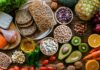
Soluble fiber rarely gets the spotlight because it lacks drama. It doesn’t come in a “before-and-after” bottle, and it doesn’t flatter anyone’s ideology. It works anyway. Evidence-backed guidance highlights soluble fiber for two reasons: it can help reduce cholesterol already circulating, and it can also blunt blood sugar spikes—meaning fewer insulin surges that may otherwise signal the body to produce more cholesterol. Oats, beans, and many plant foods earn their keep here.
Fiber also has a political advantage: it’s a self-reliance strategy. Nobody needs permission to eat more beans, vegetables, or oats. That matters in a healthcare climate where people sense, often correctly, that they’re being managed instead of coached. Better habits reduce dependence on “rescues.” That’s not anti-medicine; it’s pro-adult. Medication can be necessary, but the baseline should be a lifestyle that doesn’t constantly shove the body toward the cliff.
Why “zero cholesterol” is the wrong target—and how better targets prevent confusion
The fantasy of stopping cholesterol production entirely comes from a misunderstanding: thinking that less is always better. Biology doesn’t work like a thermostat stuck on “off.” The body needs cholesterol for core functions, so the sensible target is optimization, not eradication. That’s why mainstream prevention guidance emphasizes lowering elevated cholesterol, not deleting it. People do best when they pursue measurable, reasonable goals and repeatable routines, not extreme endpoints.
If someone promises a “hack” that bypasses tradeoffs, skepticism is healthy. The more credible approach asks: What are the controllable drivers? What habits can I stick to? What does my clinician see in my risk profile? That mindset prevents the whiplash of bouncing between fear (“cholesterol is poison”) and denial (“it’s all a lie”).
What the “stop producing” idea gets right: production control is the real battlefield
The premise still has one powerful insight: controlling production is often more meaningful than obsessing over dietary cholesterol alone. Experts increasingly emphasize reducing the triggers that push the body to make excess cholesterol—especially saturated fat and added sugar. That doesn’t mean everyone needs a joyless menu, but it does mean the “small” daily choices stack up. If insulin spikes and saturated-fat-heavy meals become routine, high cholesterol shouldn’t surprise anyone.
Medication fits here as a tool, not a lifestyle substitute. Statins, for example, aim at the production pathway by inhibiting a key enzyme used to synthesize cholesterol. Many people benefit, especially with higher risk or genetic predisposition. The practical takeaway: don’t wage a culture war over pills versus food.
Limited data in the research directly addresses the biological feasibility of fully stopping cholesterol synthesis, so the safest conclusion stays grounded: your body needs cholesterol, but you can often reduce excess production by cutting saturated fat and added sugar while increasing soluble fiber and plant-forward meals. That’s not glamorous, but it’s effective, sustainable, and aligned with how the body actually regulates itself—no fantasy required.
Sources:
https://www.missionhealth.org/healthy-living/blog/5-simple-ways-to-lower-your-cholesterol
https://medlineplus.gov/howtolowercholesterolwithdiet.html
https://www.nhs.uk/conditions/high-cholesterol/how-to-lower-your-cholesterol/
https://www.cdc.gov/cholesterol/prevention/index.html
https://www.massgeneralbrigham.org/en/about/newsroom/articles/10-foods-to-lower-cholesterol
https://www.goodrx.com/conditions/high-cholesterol/10-natural-ways-to-lower-your-cholesterol
https://www.health.harvard.edu/heart-health/11-foods-that-can-help-lower-your-cholesterol