A broken bone sets off one of the body’s most remarkable repair jobs, rebuilding itself from a blood clot into solid new bone over several months.
Story Overview
- Bone healing moves through four overlapping stages: bleeding and inflammation, soft callus, hard callus, and remodeling.
- A blood clot at the break site acts as the body’s first scaffold for repair.
- Soft, flexible tissue forms first, then hardens into bone over several weeks.
- Full remodeling to restore the bone’s original shape and strength can take months to years.
The First Hours: Blood Clots and Inflammation
When a bone breaks, nearby blood vessels tear open. Blood pools at the injury and forms a clot, called a hematoma. This clot is not just a mess to clean up. It becomes the starting scaffold the body builds on. Doctors describe this as the first stage of fracture healing, driven by immediate bleeding and swelling at the site.
Within hours, the body sends in an inflammatory response. White blood cells and signaling chemicals rush to the area. They clear away damaged tissue and call in repair cells from the bone marrow. This swelling and redness can feel alarming, but it is the body setting the stage for construction. Without this phase, nothing that follows can happen.
Mesenchymal stem cells, a kind of raw material cell, arrive during this window too. They have the ability to turn into several different cell types needed for repair, including the cartilage and bone-forming cells that come next.
Soft Callus: The Body’s Temporary Scaffold
Within days, the clot starts turning into something firmer. Soft callus forms around the break, made mostly of cartilage and fibrous tissue rather than hard bone. It is not strong enough to bear full weight, but it holds the broken pieces together while sturdier material builds underneath. Clinical fracture guides describe this as a distinct, necessary stage before true bone replaces it.
This soft callus is squishy compared to real bone, which is exactly why doctors use casts, splints, or surgical hardware during this period. The goal is to keep the fracture still so the soft callus is not disturbed before it has a chance to mature into something stronger.
Hard Callus: Turning Cartilage Into Bone
Over the following weeks, the soft callus calcifies. Blood vessels grow back into the area, and the cartilage-like material gets replaced with actual bone tissue. Researchers call this hard callus formation, and it marks the point where the fracture site gains real mechanical strength for the first time since the break.
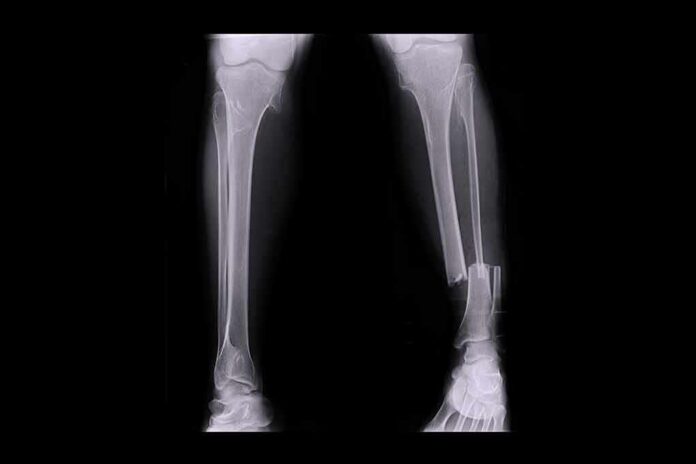
This is often when follow-up X-rays show visible new bone bridging the fracture line. For something like an ankle fracture, doctors generally expect early healing within about six weeks, with more complete healing closer to ten to twelve weeks, though timing depends heavily on the bone involved and how it was treated.
Remodeling: Months of Quiet Rebuilding
The final stage is the longest and least dramatic to watch. Specialized cells called osteoclasts slowly break down and clear away the bulky hard callus, while osteoblasts lay down smooth, organized bone in its place. Over time, this process reshapes the healed area to resemble the bone’s original structure.
Remodeling does not happen quickly. It can continue for months after a fracture feels fully healed, and in some cases stretches on for a year or more as the bone fine-tunes its internal structure to handle normal stress again.
By the end of this stage, a well-healed bone can look and function almost exactly as it did before the injury, with its strength and shape largely restored.
Why Healing Time Varies
No two fractures heal on exactly the same timeline. Age, overall health, the specific bone involved, how stable the break is, and whether surgery was needed all shift the pace of recovery. A clean break in a young, healthy person can heal faster than a complex fracture in someone older or with other health conditions.
Medical sources sometimes group these stages differently, calling them three broad phases or four more detailed ones. That is a difference in how scientists organize the explanation, not a disagreement about what actually happens inside the body. The underlying biology stays the same: clot, callus, hardening, and rebuilding, each step setting up the next.
Sources:
youtube.com, ncbi.nlm.nih.gov, pmc.ncbi.nlm.nih.gov, orthoinfo.org