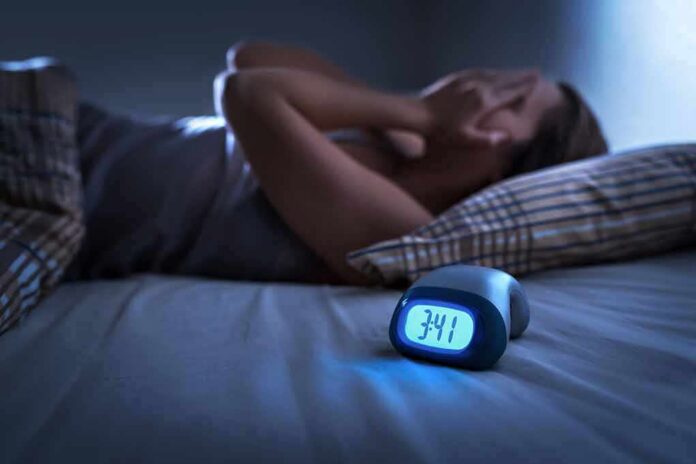
A massive study of nearly 95,000 adults found that how well you sleep may shape your risk for dozens of diseases, not just how long you sleep.
Quick Take
- Researchers tracked sleep patterns in nearly 95,000 United Kingdom Biobank participants and linked them to 156 different disease outcomes.
- More rapid eye movement (REM) sleep tied to lower risk of 83 diseases; more deep sleep linked to lower risk of seven diseases.
- Irregular sleep schedules and more time lying awake at night raised the odds of several serious conditions.
- A separate United States study of wearable-device users found the same pattern, connecting poor sleep to heart, weight, and mental health problems.
A Huge Real-World Study Tracks Sleep and Disease
Scientists analyzed sleep data from nearly 95,000 people enrolled in the United Kingdom Biobank, one of the largest health databases in the world. Instead of asking people to recall their sleep habits, researchers used tracking devices to record actual sleep patterns over time. They then compared those patterns against medical records to see which sleep habits lined up with which diseases showing up later in life.
The results, published in PLOS Medicine, found that sleep patterns were tied to 156 separate disease outcomes. That number covers a huge range of conditions, from heart problems to mental health struggles, showing that sleep touches nearly every system in the body rather than just one or two areas of health.
REM Sleep and Deep Sleep Show Protective Links
The study found that people who got more REM sleep, the dream-heavy stage tied to memory and brain repair, had lower risk of 83 different diseases. Getting more deep sleep, the stage where the body repairs tissue and muscle, was linked to lower risk of seven diseases. Both findings suggest sleep quality matters just as much as total sleep time.
These results echo an earlier study from the All of Us Research Program, which followed thousands of Fitbit users and found that REM sleep and deep sleep were tied to lower odds of an irregular heartbeat condition called atrial fibrillation. That study, published in Nature Medicine, gave researchers an early signal that sleep stages carry real health weight beyond just hours logged.
Irregular Sleep Carries Its Own Risks
Going to bed at different times each night, or waking up frequently, showed up as its own risk factor. The Nature Medicine study found that people with irregular sleep had higher odds of obesity, high cholesterol, high blood pressure, major depression, and generalized anxiety disorder. Sleep duration itself followed a J-shaped pattern, meaning both too little and too much sleep raised risk for some of these conditions.
A Second Study Backs Up the Pattern
A related global study following more than 88,000 adults over nearly seven years found that inconsistent bedtimes and disrupted body clocks were tied to sharply higher risk for dozens of diseases, including liver cirrhosis and gangrene. Different research teams, different data sets, but the same basic message kept surfacing: sleep timing and quality predict future health problems just as strongly as how many hours land on the clock.
Outside experts reviewing this body of work caution that these studies show association, not proof that fixing sleep prevents disease. One expert reaction noted that sleep patterns look like informative markers of future risk, but forcing more REM sleep or squeezing sleep into a six to eight hour window has not been shown to actually stop disease from developing.
What This Means for Anyone Checking Their Fitness Tracker
For the growing number of adults strapping on a smartwatch or ring tracker every night, these findings give real weight to the sleep scores those gadgets spit out each morning. Consistency and sleep stage quality appear to matter as much as total hours. That is a far more useful takeaway than the old advice to simply chase eight hours and call it done.
Sources:
mindbodygreen.com, sciencedaily.com, stanfordhealthcare.org