
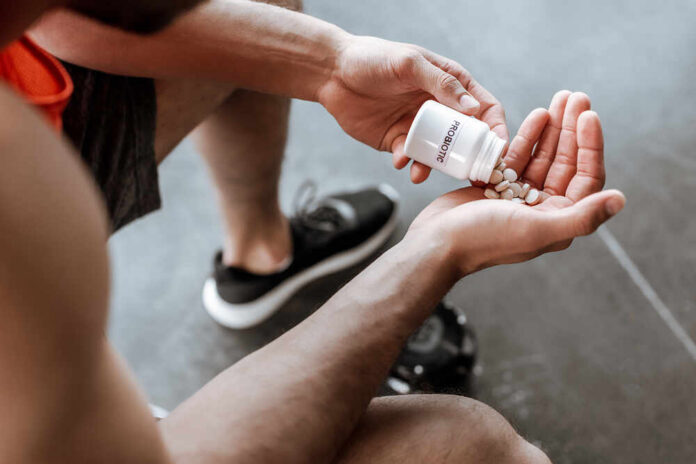
The supplement aisle sells a tempting fantasy: you can “outsource” heart health to a scoop, a capsule, and a shaker bottle.
Quick Take
- Workout supplements can overlap with heart-support mechanisms, but “supports” is not the same as “prevents heart attacks.”
- CoQ10 and taurine sit at the center of the workout-to-heart narrative because they touch energy production and oxidative stress.
- Omega-3s remain the most familiar “heart” supplement, yet medical guidance still favors food first and targeted use for high-risk people.
- Performance aids like beta-alanine and dietary nitrates can improve exercise tolerance, which matters because consistent training is the real heart medicine.
- Regulatory gaps let marketing outpace evidence; common-sense screening for risks and drug interactions matters more after age 40.
The “two-for-one” pitch works because it matches how the body works
Gym-goers don’t hunt for heart benefits because they suddenly became cardiologists. They hunt because they feel the clock. Past 40, the same workout that once felt like stress relief can feel like a stress test. The industry’s smartest angle connects performance to longevity: better mitochondria, better blood flow, less inflammation. Those themes are real biology, but the leap from mechanism to outcome is where hype breeds.
The core truth stays stubbornly simple: the strongest “heart supplement” remains the habit of training itself. Supplements can support training, fill gaps, or serve as adjuncts in specific medical situations. They cannot replace blood pressure control, sleep, nutrition, and doctor-guided care. When a label implies otherwise, it sells convenience, not cardiovascular certainty.
CoQ10: the energy molecule that marketing didn’t invent, but did inflate
CoQ10 earns its reputation because it plays a direct role in cellular energy production and also functions as an antioxidant. That dual role makes it easy to frame as both workout support and heart support. In cardiology, CoQ10 appears most often as an adjunct in heart failure discussions, not as a blanket preventive for healthy people. That distinction matters: “helpful in a condition” is not “necessary for everyone.”
CoQ10 also shows up in conversations around statins, because statins can lower CoQ10 levels and some users report muscle symptoms. The evidence for CoQ10 reliably fixing statin muscle pain stays inconsistent, which should cool the certainty in online comment sections. If you’re taking medications or have diagnosed heart disease, treat supplement decisions like you would any tool—useful when correctly matched, wasteful or risky when used blindly.
Taurine: a familiar ingredient with a serious physiology backstory
Taurine looks like an “energy drink ingredient,” but it didn’t enter science as a gimmick. Research interest ties it to cellular signaling, fluid balance, and stress responses, which helps explain why it appears in pre-workouts and endurance discussions. The heart angle exists because cardiac muscle relies on stable electrical and metabolic function. The responsible way to say it: taurine is plausible and promising for support, but it still lives in the “not a miracle” category.
Readers over 40 should focus on what taurine cannot do: it cannot compensate for stimulant-heavy pre-workouts that spike heart rate and blood pressure. The safer framing is to separate “supportive nutrients” from “performance thrills.” When a pre-workout pairs taurine with aggressive caffeine dosing, the label’s heart-friendly language can distract from the very thing your heart notices first: the stimulants.
Omega-3s, beta-alanine, and nitrates: where heart talk meets real-world tradeoffs
Omega-3s remain the household name because fish-rich diets correlate with heart benefits, and prescription-strength omega-3 therapy exists for certain high-risk people. Yet broad supplementation for everyone has produced mixed trial results, and higher doses raise concerns like atrial fibrillation risk in some contexts. Medical groups commonly emphasize diet first and targeted supplementation under clinical guidance.
Beta-alanine and dietary nitrates (often from beetroot products) live closer to performance than prevention. Beta-alanine helps buffer fatigue during hard efforts; nitrates can improve blood-flow efficiency during exercise. Their “heart benefit” is mostly indirect: if they help you train more consistently or tolerate intervals, the downstream cardiovascular gain comes from the training adaptation, not from the powder itself. That distinction keeps expectations grounded and discourages supplement roulette.
The real risk isn’t one supplement; it’s the false sense of security
The modern market thrives because it sells reassurance in a bottle. People mix a “stack” for muscle, energy, inflammation, and heart protection, then assume the basics can slide. That is the trap. Supplements can become a permission slip to ignore blood pressure, waistline creep, alcohol habits, or skipped checkups.
Regulation also lags reality. Supplements do not face the same pre-market proof standards as drugs, which makes brand credibility and third-party testing more than a nice-to-have. After 40, also assume interactions: blood thinners, blood pressure meds, diabetes drugs, and even common anti-inflammatories can complicate “natural” plans. The safest strategy treats your doctor and pharmacist as part of the stack, not as outsiders who “don’t get it.”
How to use the “6 supplements” idea without becoming a label-chaser
Use a three-question filter before buying anything marketed as workout-plus-heart. First: what is the measurable goal—better training output, corrected deficiency, or adjunct support for a diagnosed condition? Second: what is the risk profile—stimulant load, bleeding risk, rhythm issues, and medication interactions? Third: what replaces it—sleep, protein, fish intake, produce, walking, or blood pressure control? If the supplement replaces basics, it’s a losing trade.
The punchline is not “supplements are useless.” The punchline is that the best heart-health stack still starts with consistent training, real food, and medical reality checks. CoQ10 and taurine may belong in a thoughtful plan for some people; omega-3s may belong for specific risks; performance aids may help you train harder. None of them should become your heart’s only strategy.
Sources:
https://www.lifeextension.com/wellness/fitness/workout-supplements-that-work
https://www.bswhealth.com/blog/the-truth-about-popular-heart-health-supplements
https://pmc.ncbi.nlm.nih.gov/articles/PMC11479151/
https://www.peacehealth.org/healthy-you/8-heart-health-supplements-take-and-one-avoid
https://www.rochesterregional.org/hub/heart-health-supplements
https://nutritionsource.hsph.harvard.edu/workout-supplements/