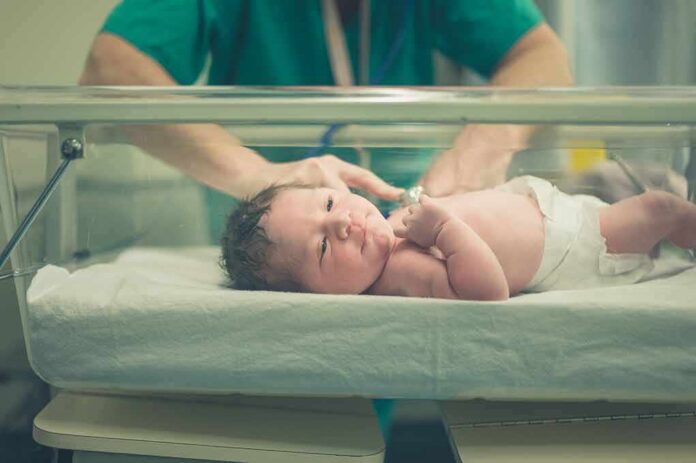
Doctors in Pennsylvania report at least six babies were born with measles during the state’s sweeping outbreak, and two newborns needed intensive care.
Story Snapshot
- At least six newborns in Pennsylvania were born with measles, doctors said.
- Two of the babies required intensive care, underscoring the severity.
- State guidance urged early infant vaccination in high-transmission areas.
- The outbreak has involved hundreds of cases and infant fatalities statewide.
Doctors flag congenital measles as outbreak pressure rises
Physicians in central Pennsylvania told reporters that at least six babies were born already infected with measles, a rare but known event when a mother catches the virus close to delivery. Two of these infants became so ill they were moved to intensive care, according to the same reporting. Newborns have little immune reserve. Measles can spread fast in their bodies and cause severe lung, brain, and multi-organ problems within days of birth.
Congenital measles happens when measles crosses the placenta or a mother is infected near delivery and the infant tests positive soon after birth. Clinical references describe the pattern clearly: a newborn can show fever and rash within 10 days and face high risks of complications, including encephalitis. That mechanism fits with Pennsylvania doctors’ description of mothers infected around the time of labor and the infants testing positive shortly after birth.
Pennsylvania’s outbreak created a perfect storm for infants
Pennsylvania has battled the nation’s toughest measles surge this year. Reports cited hundreds of confirmed cases, infant involvement, and several measles-associated deaths statewide. State health officials issued urgent guidance to protect babies, who cannot get the routine two-dose series until after their first birthday. The Department of Health advised one early measles, mumps, and rubella dose for infants 6 through 11 months old in areas with active transmission.
Hospitals and clinics adjusted fast. Facilities offered preventive antibody treatments to exposed infants and tightened triage for rash-and-fever patients to cut airborne spread. Pediatric leaders urged families in affected counties to vaccinate and to call ahead before visiting clinics with a sick child. They stressed that infants face the highest risks of pneumonia and brain swelling from measles, outcomes that can happen quickly and require advanced care.
What “born with measles” means, and why timing matters
“Born with measles” points to congenital infection, not a routine exposure after delivery. The timing of the mother’s illness is the hinge. Infection late in pregnancy or near birth can pass virus to the baby in the womb or around delivery, leading to a positive test and symptoms very early in life. That is why outbreak response targets pregnant women for immediate counseling, urgent testing after exposures, and rapid treatment pathways if symptoms develop near term.
Congenital measles remains rare, but outbreaks change the odds. When community spread climbs, more pregnant women are exposed, and a small share will be infected near delivery. Centers for Disease Control and Prevention materials explain that outbreaks are defined once three linked cases occur, and sustained spread raises the chance of unusual neonatal events even when absolute numbers stay small. That math helps explain how a handful of congenital cases can surface during a large statewide surge.
Practical steps that protect the youngest
Parents can act on three fronts. First, vaccinate on time. The first measles, mumps, and rubella shot is due at 12 months, but the state recommends an extra early dose at 6 to 11 months in high-risk areas; children still need the regular two-dose series later. Second, shield newborns. Limit close contact with anyone who has fever and rash, and ask visitors about symptoms and exposures. Third, call your doctor fast after any exposure. Prompt testing and preventive care can stop severe illness in infants.
Sources:
pa.gov, nbcnews.com, yahoo.com, inquirer.com, cnn.com, nypost.com, cdc.gov, ncbi.nlm.nih.gov, stacks.cdc.gov