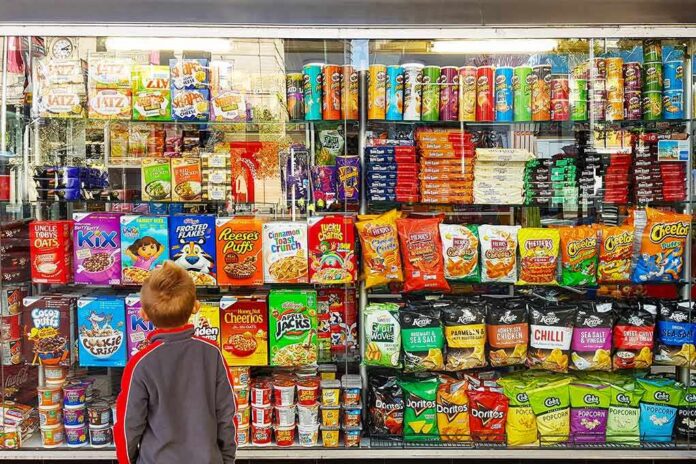
A massive new analysis of nearly 8.8 million adults found that eating more ultra-processed foods raises the risk of heart disease, cancer, diabetes, depression, and early death.
Story Snapshot
- A pooled analysis of 51 studies covering almost 8.8 million adults links ultra-processed foods to higher risk across eight major health outcomes.
- People eating the most ultra-processed food had about a 24% higher risk of cardiovascular disease.
- Every extra 100 grams eaten per day raised cancer risk by 4% and death risk by 3%.
- The category itself remains loosely defined, and the United States has no official legal definition yet.
Giant Study Links Packaged Food To Disease
Researchers pooled data from 51 long-term studies tracking almost 8.8 million adults across North and South America, Europe, Asia, and Oceania. Follow-up times ranged from two to 32 years. The study, published in Family Medicine and Community Health, found that people who ate the most ultra-processed food faced higher risks for cardiovascular disease, obesity, diabetes, depression, digestive illness, cancer, high blood pressure, and death from any cause.
The clearest number to come out of the study involves the heart. People in the highest ultra-processed food group had roughly a 24% higher risk of cardiovascular disease compared to people who ate the least. That number showed up again and again in separate news coverage of the same paper, which suggests it is the study’s most solid finding.
Every Extra Serving Raises The Risk
The study did not just compare heavy eaters to light eaters. It also measured what happens with each additional 100 grams of ultra-processed food eaten per day, roughly the size of a small bag of chips. That extra daily amount was tied to a 14% higher cardiovascular risk, a 4% higher cancer risk, a 3% higher death risk, and a 2% higher risk of metabolic syndrome or diabetes. This step-by-step pattern, where risk climbs along with intake, is known as a dose-response relationship. It gives the findings more weight than a simple yes-or-no comparison.
Other research groups have reported similar warnings. A study presented at an American College of Cardiology conference found that people eating more than nine servings of ultra-processed food a day were 67% more likely to suffer a major cardiac event like a heart attack or stroke. Separate federal data also shows a link between high ultra-processed food intake and higher rates of cardiovascular disease and death.
Researchers at Tufts University added another layer to the story. Their work found that how a food is made, not just what is in it, may matter for health outcomes. Even after accounting for overall nutrition quality, heavier ultra-processed food intake still tracked with worse body weight, blood sugar, blood pressure, and cholesterol numbers. That suggests processing itself, separate from calories or added sugar, could play a role in harm.
Why The Category Is Hard To Pin Down
Not every packaged food is equally risky, and that is where the debate gets tricky. The term “ultra-processed” covers everything from soda and candy to some breads, yogurts, and frozen meals. The United States has not finalized an official definition, and food companies have pushed back against broad warnings that lump very different products together.
Higher consumption of ultra-processed foods was found to increase risk of seven types of health conditions in the new study. https://t.co/b0Oe66hlHL pic.twitter.com/M29mhEMjIi
— Newsweek (@Newsweek) October 1, 2026
The research behind these findings is observational. That means scientists tracked what people already ate and watched what happened to their health over time. It cannot prove that ultra-processed food directly causes disease the way a controlled lab experiment could. Researchers have not yet run long-term clinical trials comparing ultra-processed diets against whole-food diets to confirm cause and effect.
Still, the sheer size of this analysis, covering millions of people across dozens of countries and multiple decades, gives it more weight than any single study could carry alone. For a public already worried about chronic disease, rising health costs, and food that seems engineered for convenience over nutrition, the message lands simply: the more processed food on the plate, the higher the risk appears to climb.
Sources:
youtube.com, abcnews.com, now.tufts.edu, acc.org, medicalnewstoday.com, elsevier.com