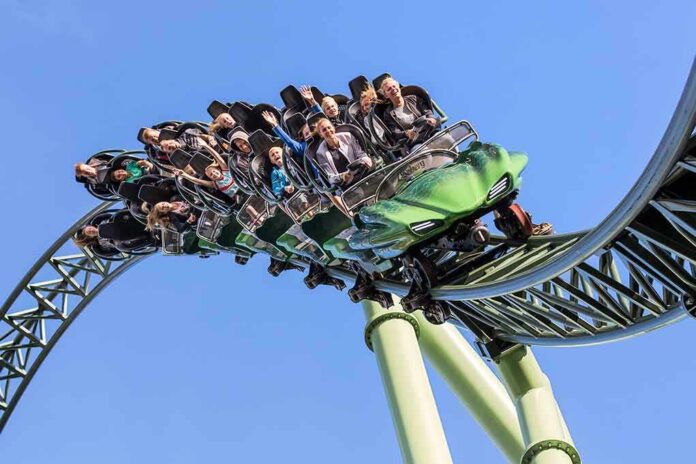
Three new lawsuits say Six Flags’ X2 coaster didn’t just thrill riders — it broke their brains.
Story Snapshot
- Attorneys say more than 100 riders reported brain injuries tied to X2 in two years.
- Three new suits allege catastrophic injuries and fault the park for unsafe conditions.
- Six Flags says X2 is inspected daily and safe for normal riders who follow rules.
- State regulators are reviewing the shuttered ride while cases move toward trial.
The Claims That Pushed X2 Into Court
Lawyers announced three new lawsuits that accuse Six Flags Magic Mountain of running X2 despite “serious head and brain injuries.” The firm says more than 100 additional riders have come forward in the past two years. The suits describe acute brain bleeds, loss of consciousness, and long recoveries that began minutes after the ride. The filings argue negligence, unsafe operation, or design defects created a known hazard that the park failed to fix or flag for guests.
Court records and news reports show similar allegations over years, including a wrongful death case that settled before trial. Families and riders point to patterns: head slams into restraints, sudden loss of balance, and emergency neurosurgery soon after exiting X2. These details do not prove the cause by themselves. They do form a trail of specific medical events and dates that any jury will study next to engineering data, inspection logs, and incident reports.
How Six Flags Counters The Narrative
Six Flags argues the ride is safe when used as directed. The company points to its daily inspections and layers of review by state authorities, insurers, outside ride inspectors, and in-house engineers. Park statements also note the obvious: thrill rides carry inherent risks, and posted warnings tell riders as much. A key line in their defense says X2’s forces are not strong enough to cause traumatic brain injury in a normal rider who follows instructions.
Manufacturers have also leaned on biomechanical experts. One filing cited an expert who concluded X2 could not produce forces that would cause the traumatic brain injury alleged by a plaintiff. Defense teams will use such opinions to cast doubt on a direct causal link between the ride and the medical outcomes. Expect a clash between lab models and hospital charts over what “normal” forces feel like when your skull meets a rigid headrest at speed.
What Regulators And Courts Will Weigh Next
California requires operators to report serious incidents and preserve evidence for review. That process brings state inspectors into the loop and creates a paper trail: maintenance logs, inspection notes, and incident files. Trials pivot on those records and the fit between physics and medicine. If dozens of cases show the same pattern within minutes of the ride, that can look like a safety signal. If data show forces within accepted limits, defense gets a foothold.
Six Flags' X2 coaster faces brain-injury lawsuits as 100 more riders come forwardhttps://t.co/hAB1NL3Gj6
— Dayton 24/7 Now (@dayton247now) September 24, 2026
Theme parks should disclose real risks in plain language and act fast when patterns emerge. Riders should read and follow warnings, secure their heads and bodies, and skip rides that clash with their health. Juries will decide if Six Flags met its duty of care. Until then, X2 remains closed while lawsuits and a state review move forward.
Sources:
washingtontimes.com, cnn.com, latimes.com, yahoo.com, 6abc.com, news.sbs.co.kr, dordicklaw.com, ibtimes.com.au, tmz.com