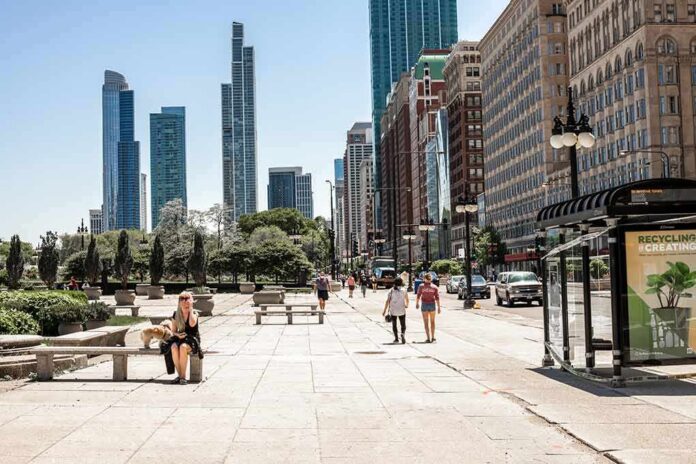
Your neighborhood quietly decides how much you move before you even lace your shoes.
At a Glance
- Streets, sidewalks, parks, and transit shape everyday activity in measurable ways.
- Most studies link better built environments with more walking and cycling.
- Changes like new trails or park upgrades often boost activity for nearby residents.
- Causal proof is strongest for transport walking and cycling; leisure effects vary.
What the strongest evidence says about where we live and how we move
Researchers followed people over time and watched what happened when cities changed streets, parks, and transit. Studies that track the same residents before and after changes, and natural experiments that compare changed areas to similar ones, report a clear pattern: better access to destinations, safer crossings, bike lanes, sidewalks, and public transportation all nudge daily activity up, especially for trips on foot or by bike. That finding fits common sense. When errands are walkable and routes feel safe, people choose their feet over their car more often.
Public health groups now point to design, not just willpower. The World Health Organization urges leaders to make walking and cycling safe and normal, because supportive environments help people stay active across the lifespan. The American Heart Association reaches a similar bottom line, advising city and county leaders to invest in connected sidewalks, bike networks, street lighting, and mixed-use zoning to make movement the easy choice for everyone. These moves do not mandate behavior; they lower the friction that keeps people sitting.
The big reviews: many links, clearer for transport than for leisure
One broad review in the American Journal of Public Health found that a large share of studies showed benefits from features like sidewalks, trails, parks, and mixed-use blocks. Most studies were observational, which limits claims about cause, but the signal leaned positive across settings and age groups. A later synthesis that focused on longitudinal and natural experiments strengthened the case. When environments improved, walking and cycling often rose with them, especially for getting to work, school, or shops. That is where place meets routine and wins.
Umbrella reviews that bundle many interventions add detail. Park renovations, the addition of exercise equipment, pocket parks, and new or better trails tend to increase use and light-to-moderate activity in nearby areas. Street designs that slow traffic and add bike lanes do more for transport activity than for gym-like workouts, which depend on habit and taste. The short version is simple: build for everyday trips on foot and wheels, and you lift movement most where people can fit it into their day.
Cause versus choice: sorting design effects from self-selection
Some readers ask whether active people just choose active neighborhoods. That concern is fair. Reviews that hunt for causation note that many studies cannot fully separate design effects from personal preference. Yet the better-designed natural experiments reduce that bias and still show gains when streets and access improve. A careful review flagged this gap and concluded that land-use mix, street links, and density matter for activity, with the strongest and most consistent effects on transport walking and cycling. That aligns with everyday experience and with common sense.
Policy should track outcomes by block, not by slogan. Governments in the United Kingdom and Canada report that changes which enhance safe, connected walking and cycling increase active travel, though certainty varies by project type and context. That calls for simple metrics any citizen can audit: Are there continuous sidewalks to schools and shops? Are crossings safe for a 10-year-old and a 70-year-old? Are bike routes protected and connected end to end? If the answer is yes, nearby activity tends to rise. If no, it tends to stall.
What works on your street: a practical checklist
Residents and local leaders do not need grand plans to start. A five-block network of smooth sidewalks, visible crosswalks, and traffic calming near a grocery store can shift dozens of weekly car trips to walking. A pocket park with shade, seating, and lighting pulls older adults back into routine movement. A protected bike lane that actually connects schools to neighborhoods can turn school runs into parent-child rides. These small links add up to a daily rhythm that builds health with no schedule change beyond leaving the keys on the hook.
Three rules anchor good investments. First, connect, do not scatter. Short, safe routes between homes, schools, and shops beat isolated facilities. Second, design for the cautious, not the brave. If a new cyclist or a grandparent feels safe, you got the design right. Third, measure before and after. Count people on foot and bike at the same times and places. Share results in plain numbers. Public trust grows when projects show movement gains that neighbors can see and verify on their own block.
Bottom line: freedom to move is a design choice
Healthy places do not nag. They invite. The strongest evidence says that ordinary design decisions—sidewalks, crosswalks, lighting, connected bike lanes, nearby destinations, reliable transit—unlock the easiest kind of exercise: the trips we already need to take. Build for that, and people move more without thinking about it. Wait for willpower alone, and most of us sit. If you want more steps, aim first at your front door, then the next safe corner, and keep linking from there.
Sources:
artofhealthyliving.com, academic.oup.com, eprints.whiterose.ac.uk, pmc.ncbi.nlm.nih.gov